



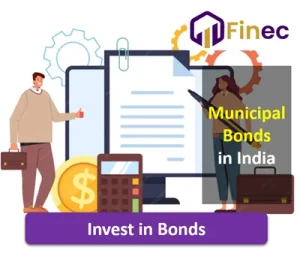
Municipal bonds are debt securities issued by eligible urban local bodies or related issuers to finance infrastructure and civic projects.
They can offer fixed coupon income, but they are not equivalent to government securities: investors must evaluate the municipality’s finances, revenue streams, escrow/security structure, credit rating, liquidity and issue terms.
India’s municipal-debt regulations were amended again in July 2026, and SEBI’s issuance database shows active municipal and green-municipal borrowing.
What this Guide Covers
- What municipal bonds are
- How municipal bonds differ from G-Secs and corporate bonds
- Green municipal bonds
- How municipal issuers repay investors
- 2026 regulatory framework
- How retail investors can invest
- Coupon, price and YTM
- Credit ratings and security structure
- Liquidity and default risks
- Taxation
- Due-diligence checklist
- Examples from recent Indian issuances
What is a municipal bond?
A municipal bond is a debt instrument issued by a municipal corporation or another eligible municipal entity to raise money for public projects.
Instead of funding the entire project from taxes, grants or bank borrowing, the issuer can access capital-market investors and repay them according to the bond terms.
Projects can include water supply, sewage, urban transport, energy efficiency and other civic infrastructure.
When proceeds are earmarked for qualifying environmental projects, and the issue follows the applicable framework, the debt may be labelled as green/ESG municipal debt.
Are municipal bonds government guaranteed?
Not automatically. A municipal corporation is a public-sector civic body, but that does not make every municipal bond sovereign debt.
Investors must read the offer document for security, escrow arrangements, any state-government support, guarantees, revenue pledges, and covenants.
Treat the issuer’s ability to generate and ring-fence cash flow as an investment question. Property-tax collection, user charges, grants, project revenues, debt-service reserve mechanisms and budget discipline can all matter.
| Feature | Municipal bond | Corporate bond | Government security |
| Issuer | Municipal / urban local body | Company / financial institution | Government |
| Primary risk | Municipal finances + structure | Corporate credit risk | Interest-rate/sovereign market risk |
| Coupon | Issue-specific | Issue-specific | Issue-specific |
| Liquidity | Can be limited | Varies widely | Usually deeper in major G-Secs |
| Use of funds | Civic/infrastructure projects | Business financing | Government borrowing |
| Credit rating | Important | Important | Sovereign context |
Related Articles
What changed in 2026?
SEBI amended the Issue and Listing of Municipal Debt Securities Regulations on July 8, 2026, followed by further implementation material in August.
This matters because older municipal-bond explainers may not reflect the current disclosure and issuance framework.
For publication, Finec should link readers to SEBI’s latest consolidated regulations rather than reproduce a static eligibility checklist that may become outdated.
Green municipal bonds
Green municipal bonds direct proceeds toward projects with environmental objectives. The “green” label does not eliminate credit risk.
Investors still need to evaluate the issuer, security structure, repayment cash flows and documentation in addition to the project’s environmental use of proceeds.
SEBI’s ESG debt statistics show municipal green issuances. For example, Nashik Municipal Corporation issued green municipal debt in March 2026 with multiple maturity tranches and an 8.05% coupon shown in SEBI’s database.
That is a useful illustration of the market, not a recommendation or a promise of current availability at the same yield.
How can a retail investor buy municipal bonds?
The first route is a public issue if and when a municipal bond is offered to retail investors. The second is the secondary market after listing, through a broker that provides access to the relevant debt segment.
Availability and minimum trade sizes depend on the security and market infrastructure.
Online bond platforms can make debt discovery easier, but investors should use platforms operating within SEBI’s online bond platform provider framework and still verify the specific bond on the exchange/depository records.
A bond being visible online is not a substitute for reading the offer document and rating rationale.
Coupon vs YTM: do not confuse the two
The coupon is the interest rate written into the bond terms. YTM is the yield implied by the market price and remaining cash flows.
If you buy a bond below face value, YTM can be above the coupon; if you buy above face value, YTM can be below it.
For a bond held to maturity, YTM is a useful comparison measure but still assumes the promised payments occur. Credit default, restructuring, call/put features and taxes can change the realised result.
How to read a municipal credit rating
Credit ratings summarise an agency’s opinion on credit risk; they are not guarantees.
Read the rating rationale to understand revenue concentration, operating surplus, debt-service coverage, dependence on grants, escrow cash flows and contingent liabilities.
Also check whether the rating has a stable/positive/negative outlook and whether it has changed since issuance. A rating downgrade can reduce secondary-market value before an actual payment default occurs.
Taxation of municipal bonds
For resident individuals, coupon interest from taxable municipal debt is generally part of taxable income under the applicable rules; do not assume a municipal bond is tax-free merely because the issuer is a civic body.
Capital-gain treatment on sale/redemption depends on the specific security, listing status, holding period and current tax law.
Certain non-resident/FPI provisions can prescribe special withholding or tax rates for eligible municipal debt securities.
Key risks
- Issuer credit and payment risk
- Revenue/escrow underperformance
- Refinancing risk
- Interest-rate risk
- Low secondary-market liquidity
- Rating downgrade
- Project execution or political/administrative changes
- Complex security/covenant structure
- Concentration if investor buys only one city/issue
- Tax-law changes
Municipal bond due diligence checklist
- Verify issue/ISIN on exchange or SEBI data
- Read offer document
- Check credit rating and latest rationale
- Understand security and escrow mechanism
- Review debt-service reserve requirements
- Check revenue source backing the bond
- Compare YTM with G-Secs and similarly rated corporate bonds
- Check maturity and call/put terms
- Assess liquidity/trading history
- Calculate post-tax return
- Avoid treating high coupon as proof of safety
Frequently Asked Questions
Are municipal bonds risk-free?
No. They are debt issued by a municipality and must be evaluated for credit, structure, liquidity, and interest-rate risk.
Are all municipal bonds tax-free?
No. Investors should check the specific issue and current tax law rather than assume tax exemption.
Can retail investors buy municipal bonds?
Potentially, yes, through eligible public issues or the secondary market, subject to the security, broker access, and trade-size rules.
What is a green municipal bond?
A municipal debt issue whose proceeds are allocated to qualifying green/environmental projects under the applicable framework.
Should I compare coupon or YTM?
Use both, but YTM is usually more useful for comparing bonds trading at prices away from face value. Credit and liquidity remain critical.
Disclaimer: This article is for education and general information. It is not investment, legal or tax advice. Readers should verify current rules and, where appropriate, consult the relevant intermediary, company, registrar, tax professional or legal adviser.