



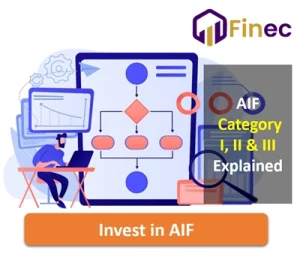
You’ve probably seen “AIF” mentioned alongside private equity, venture capital, or hedge-fund-style strategies — usually pitched to investors who’ve “outgrown” mutual funds.
But an AIF isn’t a single product; it’s a regulatory category covering everything from early-stage startup funding to leveraged hedge-fund trading, each with dramatically different risk, tax, and liquidity profiles.
This guide goes deep into how Alternative Investment Funds work in India — the three SEBI categories, how fees are structured, how your money gets deployed, and, honestly, who should (and shouldn’t) be looking at AIFs in 2026.
What Exactly is an AIF?
An Alternative Investment Fund (AIF) is a privately pooled investment vehicle, registered with SEBI under the SEBI (Alternative Investment Funds) Regulations, 2012, that raises capital from sophisticated investors and deploys it according to a defined investment strategy — one that mutual funds are structurally barred from pursuing.
A few defining features set AIFs apart from the investments most people are familiar with:
- They’re privately placed — an AIF is legally barred from soliciting the general public, unlike mutual funds, which actively market to retail investors.
- They’re structured as a trust, LLP, or company, not a mutual fund scheme, and investors receive units representing their share of the fund.
- They can invest where mutual funds can’t — unlisted equity, private credit, real estate, structured debt, and complex derivative-based hedge strategies are all fair game for various AIF categories.
- The minimum entry ticket is ₹1 crore per investor — a hard SEBI floor designed specifically to keep AIFs out of reach for retail investors who may not be able to absorb the associated risk and illiquidity.
India’s AIF industry has grown into a genuinely significant part of the private capital markets — cumulative commitments crossed roughly ₹15.7 lakh crore as of late 2025/early 2026, according to SEBI’s AIF statistics, spread across more than 1,400 registered funds.
This scale reflects real, growing demand from HNIs, family offices, and institutions looking for exposure beyond public markets.
Category I AIFs — Venture Capital, Angel, Infrastructure & Social Venture Funds
Category I AIFs invest in areas the government and regulators consider economically or socially beneficial — typically early-stage, high-growth, or infrastructure-oriented sectors.
Common sub-types:
- Venture Capital (VC) Funds — invest in early-to-growth-stage startups in exchange for equity.
- Angel Funds — a specific, more tightly regulated sub-category of VC funds, pooling capital from angel investors to back very early-stage startups.
- Infrastructure Funds — invest in infrastructure projects (roads, energy, urban development) that typically require long gestation periods before generating returns.
- Social Venture Funds — invest in enterprises with a social or developmental impact objective alongside financial returns.
Key characteristics:
- Typically close-ended, with a fund tenure of 5–10 years (extendable by up to 2 years with the consent of two-thirds of unit holders by value).
- Enjoy pass-through taxation — the fund itself doesn’t pay tax on most income; gains flow through and are taxed directly in investors’ hands.
- Carry genuinely high risk, particularly VC and angel investments, where a meaningful share of portfolio companies may fail entirely — returns are typically driven by a small number of significant winners offsetting several losses.
- The management fee for Angel Funds specifically is capped by SEBI, unlike other AIF categories where fee structures are commercially negotiated.
Category II AIFs — Private Equity, Private Debt & Real Estate Funds
Category II AIFs are the largest and most established segment of India’s AIF industry, covering strategies that don’t fit neatly into Category I’s socially beneficial mandate or Category III’s leveraged/hedge-style approach.
Common sub-types:
- Private Equity (PE) Funds — invest in more mature, established private companies, often taking significant ownership stakes to drive growth or operational improvement before an eventual exit (IPO, sale, or buyback).
- Private Credit/Debt Funds — provide structured lending to companies, often at attractive yields (commonly cited in the 12–18% range for senior-secured private debt strategies), functioning similarly to a specialised lender rather than an equity investor.
- Real Estate Funds — invest in commercial or residential real estate projects, often at the development or pre-completion stage.
- Fund-of-Funds — invest in other AIFs rather than directly in companies or assets, providing diversification across multiple underlying fund managers.
Key characteristics:
- Also typically close-ended, with similar 5–10 year tenures (extendable) as Category I.
- Also enjoy pass-through taxation, making Category II broadly the most tax-efficient AIF category alongside Category I.
- Private debt strategies within Category II are often cited as a relatively more approachable entry point for HNIs newer to AIFs, given their income-generating, senior-secured structure compared to the binary, illiquid outcomes typical of VC/PE.
Private-credit and debt-oriented strategies should also be compared with directly held corporate bonds, where investors can evaluate coupon, YTM, rating and maturity security by security.
Category III AIFs — Hedge Funds & Long-Short Strategies
Category III AIFs are the most complex and actively traded category, employing strategies more familiar from global hedge funds — long-short equity, derivatives-based strategies, and sometimes leverage, aiming to generate returns regardless of overall market direction.
Key characteristics:
- Can be either open-ended or close-ended, unlike Category I and II, which are almost always close-ended — giving Category III comparatively better (though still limited) liquidity in many cases.
- Taxed at the fund level, not passed through to investors — and for leveraged strategies specifically, this can mean taxation at the Maximum Marginal Rate (MMR), which currently runs around 42.74% including applicable surcharge and cess. This is a materially different — and often higher — tax outcome than Category I/II’s pass-through treatment.
- Invests in listed securities and derivatives, generally with faster portfolio turnover than the multi-year holding periods typical of PE/VC strategies in Category I/II.
- Recent legal and regulatory developments have made some Category III structures more tax-efficient for certain investor types, but the fund-level taxation baseline remains the key structural difference to understand before investing.
This fund-level taxation is precisely why comparing a Category III AIF’s advertised “gross return” against a Category II private debt fund’s yield can be genuinely misleading without factoring in the very different tax treatment each carries.
If you’ve decided which category fits your risk appetite, here are AIF providers running each of these categories.
How AIF Fees Actually Work
AIF fee structures are more layered than mutual funds, and understanding them is essential before you commit capital:
| Fee Component | What It Covers | Typical Range |
| Management Fee | Ongoing fund operating and management costs | Not capped by SEBI (except Angel Funds); typically 1.5%-2.5% annually on committed or drawn-down capital |
| Hurdle Rate | Minimum return the fund must generate before manager earns a performance fee | Typically 8%-10% annually |
| Carried Interest (Performance Fee) | Manager’s share of profits above the hurdle rate | Typically 15%-20% of profits above the hurdle |
| One-Time/Setup Charges | Onboarding, KYC, legal review costs | Typically 0%-1% of committed capital (sometimes waived for large tickets) |
A crucial question to ask before investing: is the management fee charged on your committed capital or only on drawn-down (actually deployed) capital?
This can meaningfully change your effective cost, since committed capital that hasn’t yet been called (drawn down) may still attract fees in some fund structures.
Every fee component—including its basis and the party bearing the cost—must be disclosed in the fund’s Private Placement Memorandum (PPM), the single most important document to review in detail before committing.
How Your Money Actually Moves — Commitments, Drawdowns & the J-Curve
Unlike a mutual fund, where your entire investment amount is deployed immediately, most Category I and II AIFs work on a commitment and drawdown model:
1. You commit a total amount (say, ₹1 crore) to the fund at the outset.
2. The fund manager issues “capital calls” (drawdowns) over time — often across 3–5 years — calling in portions of your committed capital as actual investment opportunities are identified.
3. This avoids cash sitting idle in the fund waiting for deployment, but it also means you need to keep the uncalled portion of your commitment liquid and accessible until it’s actually called.
This structure directly produces what’s known as the J-curve effect, especially in VC/PE-style Category I and II funds: returns often look negative in the early years of a fund’s life, since management fees are charged while few (if any) investments have been realised for a profit.
Returns typically only turn positive in the fund’s later years, as portfolio companies mature and exits (IPOs, sales) begin generating actual distributions.
Investors unfamiliar with this pattern sometimes misread early J-curve losses as a sign the fund is underperforming, when it may simply be following an entirely normal private-markets return trajectory.
Who Can Invest? Eligibility, Minimum Ticket & Accredited Investors
AIFs are explicitly not open to the general public. The core eligibility framework works like this:
- Standard minimum investment: ₹1 crore per investor, across all three categories.
- No formal “accreditation” is mandatory to invest at the standard ₹1 crore level — any investor meeting the minimum ticket and completing KYC can generally participate, subject to the fund’s own PPM terms.
- Accredited Investor status is an increasingly important, separate SEBI framework that unlocks access to specialised structures — including Large Value Funds (LVFs), which have relaxed regulatory requirements and, following recent reforms, a lowered minimum threshold of ₹25 crore for accredited investors specifically (down from a considerably higher earlier threshold).
- To become an Accredited Investor, you typically need a net-worth certificate from a Chartered Accountant confirming you meet SEBI’s prescribed threshold — SEBI has simplified this process to require only a confirmation of the threshold being met, rather than a full net-worth breakdown.
- Co-Investment Vehicles are a newer structure introduced as part of recent reforms, allowing accredited investors to invest alongside the main AIF in specific portfolio opportunities, offering more direct, deal-by-deal exposure than a standard pooled commitment.
For NRIs looking to invest in AIFs, FEMA-compliant documentation and routing through an NRE/NRO account are typically required — our NRI account guide covers related account considerations.
2026 Regulatory Updates You Should Know About
SEBI has introduced several meaningful changes to the AIF framework recently that every current and prospective investor should be aware of:
| Update | What Changed | Effective |
| Mandatory Dematerialisation | All AIF units must be held in demat form; physical unit certificates eliminated | From April 1, 2026 |
| Large Value Fund (LVF) Threshold | Minimum ticket for accredited investors in LVF structures lowered to Rs 25 crore | Recent reform (2025-26) |
| Co-Investment Vehicles | New structure allowing accredited investors to co-invest alongside the main fund in specific deals | Recent reform (2025-26) |
| Custodian Requirement | Mandatory appointment of a custodian if fund corpus exceeds Rs 500 crore | Ongoing SEBI requirement |
| Depository Reporting | Funds must report unit valuations to depositories, improving private asset transparency | Recent SEBI mandate (2026) |
The mandatory demat mandate is a genuinely practical improvement for investors—it simplifies estate transfers, consolidated account statement (CAS) reporting, and generally brings AIF holdings into the same digital infrastructure already used for stocks and mutual funds, via your demat account.
Risks of Investing in AIFs
Beyond the headline “high risk” label, here are the specific risks worth understanding in detail:
- Illiquidity risk: Category I and II funds are typically locked for 5–10 years, with no guaranteed early exit mechanism — this isn’t money you can access on short notice.
- Manager/concentration risk: Your outcome depends heavily on a single fund manager’s specific decisions and sector calls, unlike a diversified mutual fund spread across dozens of holdings and, often, multiple sub-strategies.
- J-curve risk: As covered above, early negative or flat returns are structurally normal in PE/VC-style funds — but this can be uncomfortable and misread without proper expectation-setting upfront.
- Fee drag: Layered management fees plus carried interest mean a fund needs to generate meaningfully higher gross returns than a mutual fund just to deliver comparable net returns to you.
- Tax structure risk (Category III specifically): Fund-level taxation at the Maximum Marginal Rate for leveraged strategies can significantly erode net returns compared to the fund’s advertised gross performance.
- Valuation and transparency risk: Unlike listed securities with daily market prices, private assets (PE, real estate, private credit) rely on periodic manager-provided valuations, which can be less transparent and harder to independently verify than public market pricing.
- PPM-specific risk: Since PPMs aren’t standardised across fund houses, two funds that appear similar in marketing material can differ substantially in actual terms — reading the PPM in full, not just the pitch deck, is essential.
Who Should (and Shouldn’t) Invest in Each Category?
| Category | Best Suited For | Generally Not Suited For |
| Category I (VC/Angel/Infra) | Investors with a genuinely long horizon (7-12+ years), high risk tolerance, fully illiquid capital | Anyone needing liquidity within 5 years, or uncomfortable with high individual investment failure rates |
| Category II (PE/Private Debt/Real Estate) | Investors seeking private market exposure with 5-10 year horizon; private debt suits income-focused HNIs | Investors prioritising liquidity or unable to commit capital across a multi-year drawdown schedule |
| Category III (Hedge/Long-Short) | Sophisticated investors comfortable with active strategies, aware of fund-level tax treatment | Investors seeking simple, tax-efficient, buy-and-hold exposure |
Frequently Asked Questions
What is the minimum investment required for an AIF in India?
SEBI mandates a minimum of ₹1 crore per investor across all three AIF categories, though individual funds may set higher minimums, and accredited investors can access certain Large Value Fund structures starting from ₹25 crore.
Which AIF category is taxed most efficiently?
Category I and II AIFs generally offer pass-through taxation, meaning gains are taxed directly in investors’ hands rather than at the fund level. Category III AIFs, particularly leveraged strategies, are taxed at the fund level, often at the Maximum Marginal Rate (currently around 42.74%), which can meaningfully reduce net returns.
What is the J-curve, and why does it matter?
The J-curve describes the tendency of Category I and II funds (especially VC/PE) to show negative or flat returns in their early years—because management fees are charged before investments mature and generate exits—before turning positive in later years as the fund’s portfolio companies are realised. It’s a structurally normal pattern, not necessarily a sign of poor fund performance.
Do I need to be an “Accredited Investor” to invest in an AIF?
No, not for standard AIF investment at the ₹1 crore minimum. Accredited Investor status is a separate, optional SEBI framework that unlocks access to Large Value Funds and Co-Investment Vehicles, which have relaxed regulatory requirements but higher minimum tickets.
Are AIF units now held in demat form?
Yes — as of April 1, 2026, SEBI mandates that all AIF units be held in dematerialised form, eliminating the older system of physical unit certificates and simplifying reporting and estate transfers.
What is a hurdle rate in an AIF?
A hurdle rate is the minimum annual return (typically 8-10%) a fund must generate before the manager becomes entitled to a performance fee (carried interest) on profits above that threshold. It’s designed to align the manager’s incentive with delivering genuinely strong returns, not just any return.
Can I exit an AIF before its full tenure ends?
Generally, Category I and II AIFs are close-ended with limited or no provision for early exit before the fund’s 5-10 year tenure (extendable by up to 2 years with unit holder consent). Category III funds, being open- or close-ended depending on structure, can offer somewhat more flexibility — but always check the specific fund’s PPM for exact terms.
Final Thoughts
AIFs open the door to genuinely differentiated strategies — venture capital, private credit, real estate, and hedge-fund-style trading — that simply aren’t accessible through mutual funds or even PMS.
But that access comes with real structural trade-offs: a hard ₹1 crore minimum, multi-year illiquidity, layered fees, and — critically, for Category III — a fund-level tax treatment that can significantly change your actual net returns.
Before committing capital to any AIF, read the PPM in full, understand exactly how and when fees are charged, factor in the category-specific tax treatment, and honestly assess whether you can genuinely treat that capital as locked away for the fund’s full tenure.
For a broader comparison of how AIFs stack up against PMS and mutual funds, see our guide on PMS vs AIF vs Mutual Funds.
Disclaimer: This article is for general educational purposes and does not constitute investment advice. AIFs are high-risk, illiquid, privately placed products intended for sophisticated investors. Always read the Private Placement Memorandum (PPM) in full and consult a SEBI-registered investment advisor before committing capital.